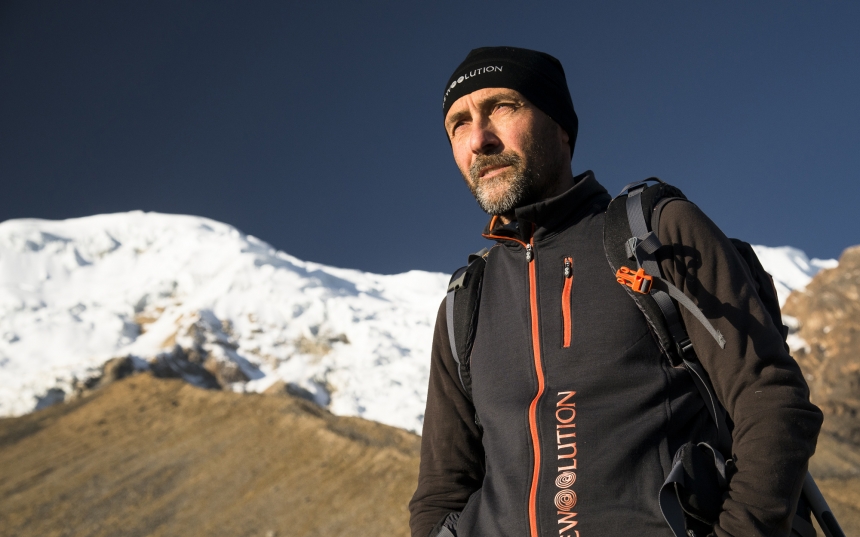
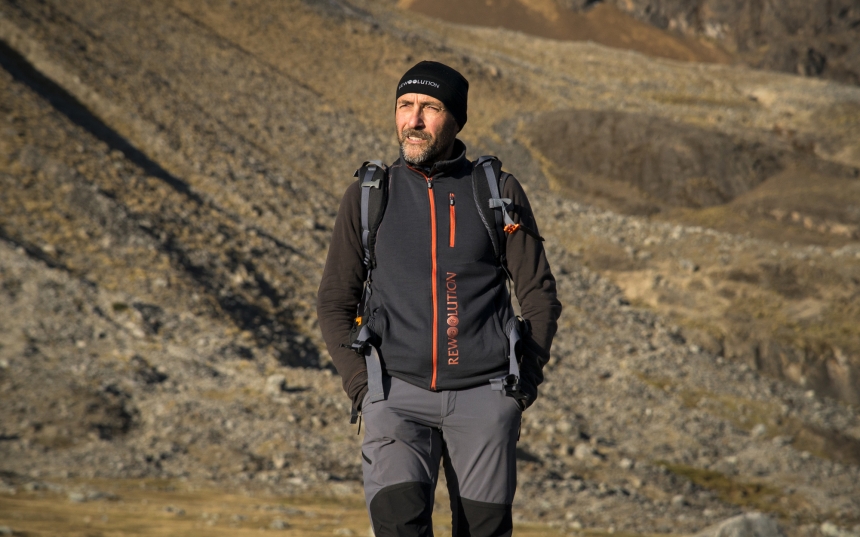
Enrico Rosso (1961) is an Italian mountaineer and one of the leading figures of exploratory alpinism in the 1980s and 1990s. From the very beginning, he developed a light and creative style, favoring the alpine approach on big walls and minimalist expeditions, without supplementary oxygen or artificial support. He considers mountaineering a form of expression and inner exploration, guided by choices that are both aesthetic and technical, often focused on remote mountains and new routes.
After an intense period of activity in the Western Alps during the 1980s, with numerous first ascents and solo climbs, in 1988 he achieved the first ascent of the “left pillar” on the east face of the Grandes Jorasses. During the same period, he gained international recognition through major expeditions in the Himalaya and Karakoram: among these, the first ascent of the north-east face of Shivling (1986), the alpine-style ascent of Latok III, and in 1989 the first ascent of the south pillar of Nuptse, a route of great technical difficulty. In the following years, he opened a new route on Thalay Sagar and took part in expeditions to mountains such as Cho Oyu and K2.
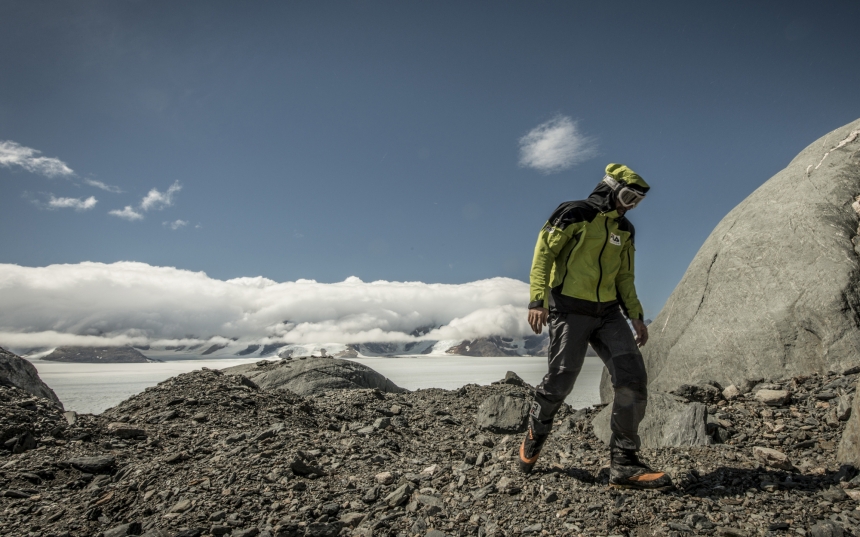
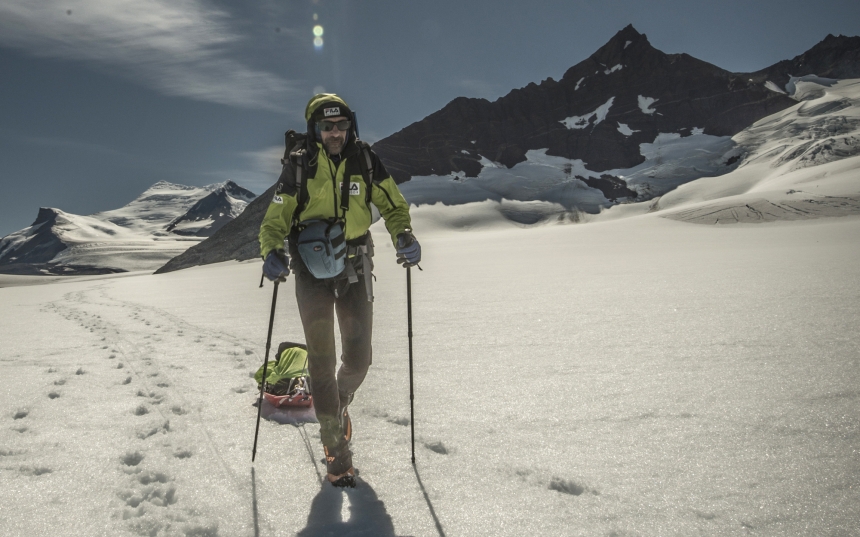
At the same time, he developed strong exploratory activity in the Andes and Patagonia. In Peru, he completed first ascents in the Cordillera Huayhuash and numerous climbs in the Cordillera Blanca, including Nevado Copa (Paolo Consiglio CAAI Award) and new routes on Santa Cruz. In Patagonia and Tierra del Fuego, starting in the 1990s and then continuously from 2006 onward, he alternated ascents on peaks such as Fitz Roy, Aguja Poincenot, and Cerro De Girad with historical research on the figure of Alberto Maria De Agostini. He has also carried out intense mountaineering and educational activities in Bolivia and, more recently, in Africa with the ascent of Mount Kenya.
Alongside mountaineering, Rosso is the author of books and documentaries dedicated to mountains and exploration, in which he combines experience, historical memory, and personal reflection. In 1992, he founded the association Montagna Amica, with the aim of promoting the mountains as a tool for human and social development. He has also served several times as a jury member for the Piolets d’Or.




It seems that you are browsing from the US.
Please check our CRISPIUSA.COM website or remain on CRISPI.IT
It seems that you are browsing from New Zealand.
Please check our CRISPI.CO.NZ website or remain on CRISPI.IT
 France
 Germany
 Italy
Italy
 Norway
 United Kingdom
 United States
 New Zealand